Student Stress Management Research
Human-Centered Design research on improving student well-being at MSOE

Context
In UXD 1001 Human-Centered Design at the Milwaukee School of Engineering (MSOE), my team of two members began a design sprint focused on improving how MSOE students manage stress during busy academic weeks. We found that many students struggle with managing time to ensure a balance between course work and personal time.
My role was to interview students to help define pain points that we could address in our final project. I spoke with students, found consistencies in results, and reported my findings back to the team so we could create a problem statement to guide the remainder of our research.
Process
Through three student interviews, I inquired about daily routines, triggers of stress, and how students have learned to cope. I took notes during each interview, capturing the details that would later help identify patterns across different student experiences.
After completing the interviews, I drew connections between the different responses and organized my findings into an affinity map. This process helped visualize the common themes and pain points that emerged from the conversations.
With my team, I assisted in building a profile for a typical student who fits our pain points. This profile represented the composite of the students we interviewed and their shared struggles. After putting all our findings together, my team narrowed the problem enough to draft our How Might We statement.
Final Product
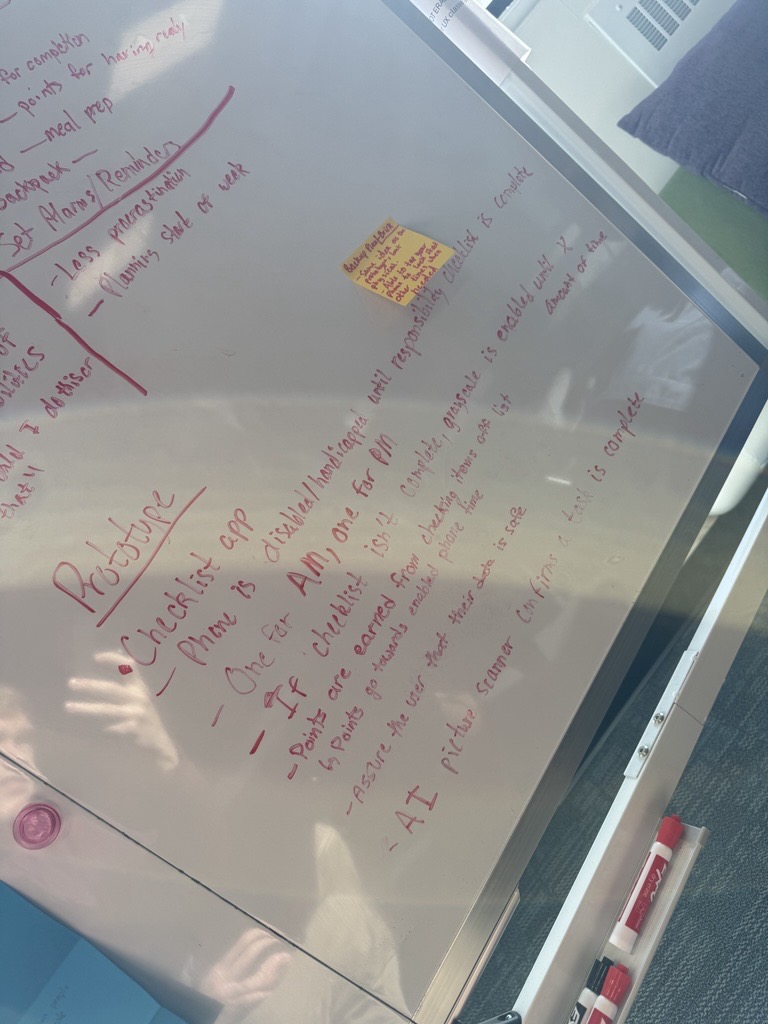
Our research revealed that the core of most issues is related to phone usage. Students consistently identified their phones as a source of distraction and a contributor to poor time management.
We determined that the best course of action may be to reduce phone usage before bed and immediately after waking up. These times proved to be particularly impactful on students' ability to establish healthy routines and get adequate rest.
We also found that reducing distractions created by phones during peak hours for classes or homework could improve student productivity. The pattern was clear: phone interruptions during these critical times significantly impacted students' ability to focus and complete their work efficiently.
We garnered a clear direction for our team to focus on during the Ideate and Prototype phases. The research phase successfully narrowed a broad problem into specific, actionable opportunities for design intervention.
Key Findings
- Phone usage was the core issue: Students consistently reported that their phones were their biggest source of distraction and a major contributor to poor sleep habits.
- Morning and evening phone habits: Students frequently reached for their phones immediately upon waking and before bed, setting a negative tone for their days and disrupting sleep quality.
- Distraction during peak hours: Phone notifications and the temptation to check social media created significant disruptions during classes and homework sessions.
- Awareness without action: Most students recognized their phone habits were problematic but struggled to implement lasting changes on their own.